
PLINTH is a raised pond with integrated filtration, pump, and fountain — and the right plants transform it into a living garden feature. This guide covers the best aquatic plants for a raised pond in the UK and how many you need.
BEST PLANTS FOR A RAISED POND UK
Three Types of Aquatic Plant
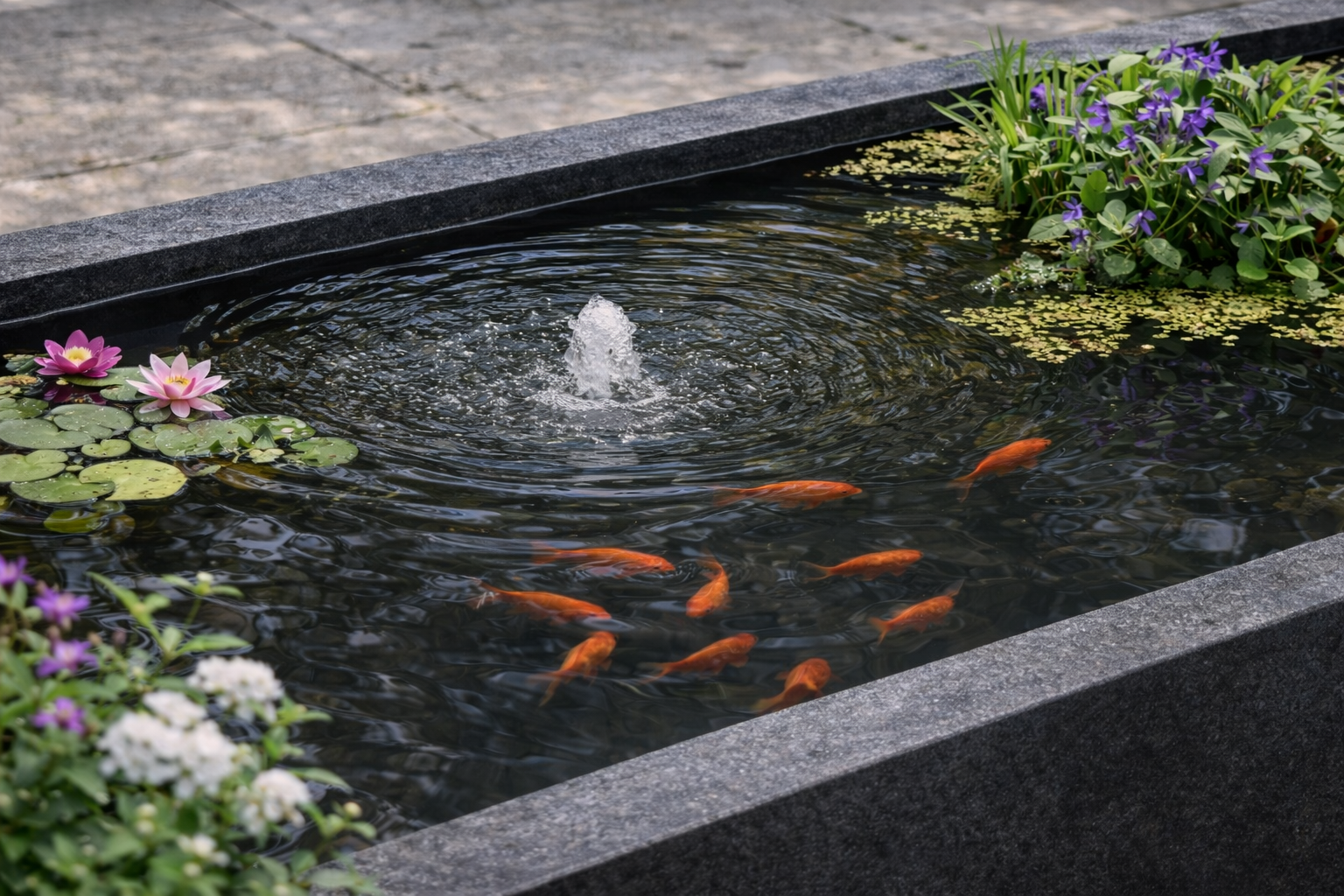
Marginal plants grow at the edges with roots submerged and foliage above the water. They provide height, structure, and seasonal flowers. Placed in baskets on raised platforms with the rim 5–10cm below the surface.
Oxygenating plants grow fully submerged below the surface. They keep water clear by absorbing excess nutrients and producing oxygen. Essential for water quality, especially with fish.
Surface plants float on or just below the surface. Water lilies provide shade, reduce algae, and offer shelter for fish. Their leaves and flowers sit on the water with roots trailing below.
Recommended Plants
Iris laevigata (Japanese water iris) — tall, structural, purple-blue flowers in early summer. Height 60–80cm. Plant 5–10cm below surface.
Caltha palustris (marsh marigold) — compact, golden flowers in spring. One of the first to bloom. Height 30–40cm. Plant 0–5cm below surface.
Myosotis scorpioides (water forget-me-not) — soft blue flowers, trails over the edge. Height 20–30cm. Plant 0–5cm below surface.
Typha minima (dwarf bulrush) — upright, architectural, distinctive seed heads. Height 40–60cm. Plant 5–10cm below surface.
Ceratophyllum demersum (hornwort) — the best submerged oxygenator. Free-floating or weighted. Keeps water clear. No basket needed.
Nymphaea (dwarf water lily) — surface flowers from June to September. Choose pygmy varieties for water depth of 20–40cm. Provides shade and algae control.
Equisetum hyemale (rough horsetail) — striking vertical stems with dark banding. Very architectural. Height 60–90cm. Contain in a sealed basket as it spreads.
Houttuynia cordata — heart-shaped leaves, compact. Good ground cover at the pond edge. Height 15–30cm. Plant 0–5cm below surface.
How Many Plants
PLINTH 120: 2–3 marginals, 1 bunch of oxygenators.
PLINTH 180: 3–5 marginals, 2 bunches of oxygenators, 1 dwarf lily.
PLINTH 240: 4–6 marginals, 2–3 bunches of oxygenators, 1 lily. Leave at least half the surface open.
Planting Method & What to Avoid
How to Plant
Use aquatic planting baskets lined with hessian and filled with aquatic compost (not garden compost). Top with fine gravel to stop compost floating out. Place baskets on inverted pots or bricks to raise them to the right depth.
Plants to Avoid
Avoid invasive species — Crassula helmsii (Australian swamp stonecrop) and Myriophyllum aquaticum (parrot's feather) are both illegal to sell or plant in the UK. Avoid large water lilies that need deep water. Avoid vigorous spreaders unless in sealed baskets.
You might also find these useful
Modern Garden Water Features
Raised Garden Pond Guide
Raised Pond vs Water Feature
Above-Ground vs In-Ground Ponds
Small Garden Water Feature Ideas
Contemporary Raised Pond Ideas
Modern Garden Pond Costs (UK)
Can You Keep Fish in a Raised Garden Pond?
Best Plants for a Raised Pond UK
Design Your Plinth
Raised Pond Lighting Ideas
How to Winterise a Raised Pond
Frequently Asked Questions
Late spring (April–May) is ideal. Plants establish quickly in rising temperatures and increasing daylight. Marginals and oxygenators can be added through summer. Water lilies from May onwards.
No. A raised pond with integrated filtration works perfectly with water alone. Plants add seasonal colour and improve water quality but are not essential.
Yes. Plants provide shade, shelter, and help maintain water quality. Fish provide natural fertilisation. Avoid soft-leaved species that fish may eat — iris, marsh marigold, and hornwort are all fish-safe.
Use aquatic planting baskets with aquatic compost, topped with fine gravel. Place on inverted pots or bricks inside the pond. Most marginals want their basket rim 5–10cm below the water surface.
Generally no, especially if you have fish — their waste provides natural nutrients. In a fish-free pond, slow-release aquatic fertiliser tablets once or twice in the growing season are sufficient.
Avoid invasive species like Crassula helmsii and Myriophyllum aquaticum (both illegal in the UK). Avoid large water lilies needing deep water, and vigorous spreaders unless in sealed baskets.
Ready to choose yours?
The PLINTH Founding Collection is available now. Three sizes with integrated filtration, pump, and fountain. Free UK delivery.
Browse the Founding Collection →