
PLINTH is a raised pond with integrated filtration, pump, and fountain — a complete, ready-to-place system starting from £2,295. This guide breaks down the real costs of a modern garden pond in the UK.
Raised Garden Pond Guide
A raised garden pond is an above-ground water system designed to sit directly on patios, terraces and structured garden spaces without excavation.
Unlike traditional in-ground ponds, raised systems offer cleaner architectural lines, controlled internal water depth and integrated filtration, making them increasingly popular in modern UK gardens.
What Is a Raised Garden Pond?
A raised garden pond is a self-contained above-ground structure that holds water without being recessed into the soil. It typically includes integrated filtration, pump circulation and controlled overflow.
Because the structure sits on the surface, installation is significantly simpler than digging a traditional pond.
Modern raised garden ponds are typically manufactured as complete, watertight units with integrated filtration and circulation systems.
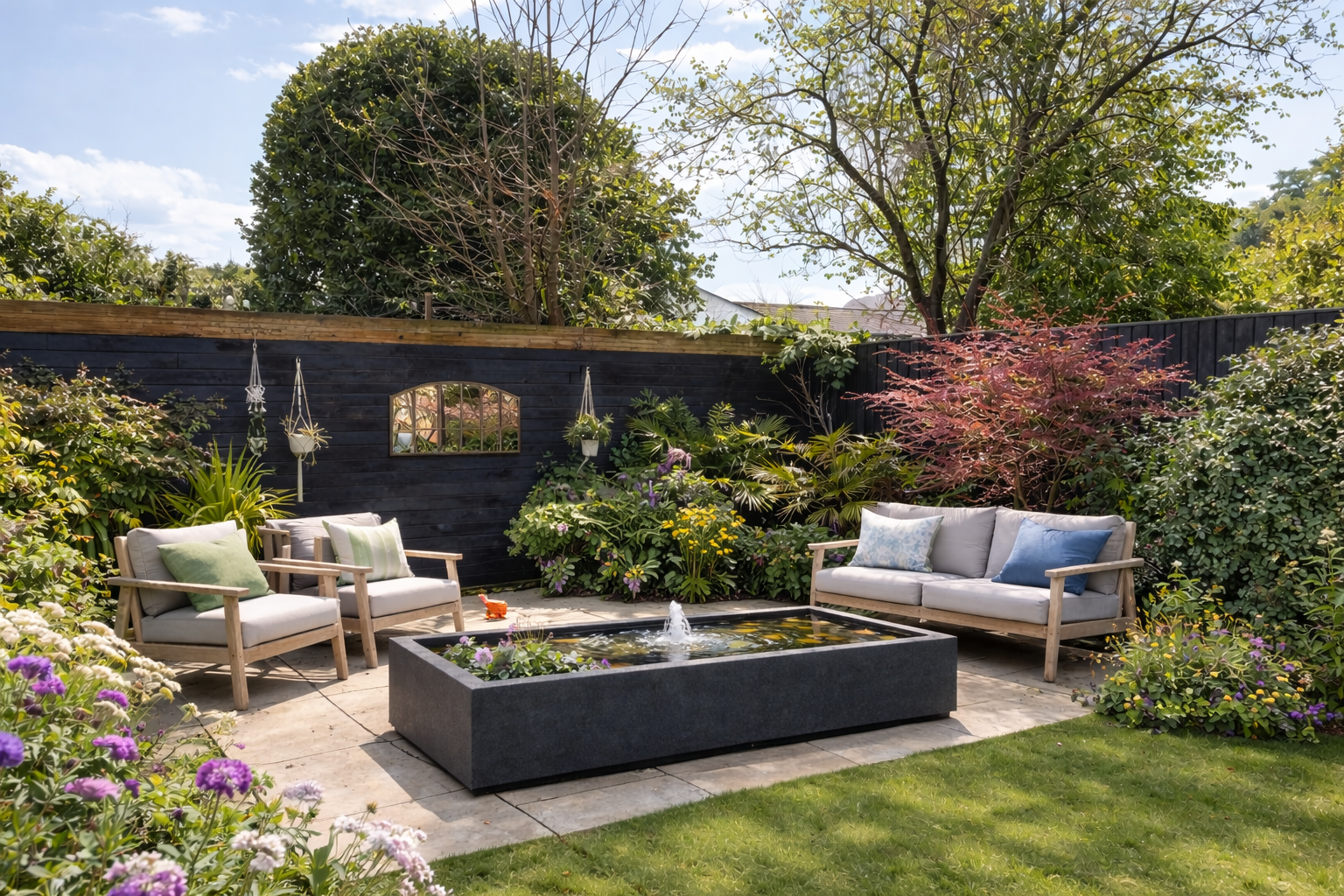
Raised vs In-Ground Ponds
In-ground ponds require excavation, ground preparation, lining and edging. Raised garden ponds eliminate these steps.
Raised systems:
• Require no excavation
• Can be installed on patios
• Offer controlled internal depth
• Provide integrated filtration
• Suit contemporary layouts
In-ground ponds:
• Require significant groundwork
• Can be harder to maintain
• Are more exposed to soil contamination
• Often need separate filtration systems
Can You Keep Fish in a Raised Garden Pond?
Yes, provided depth and filtration are appropriate.
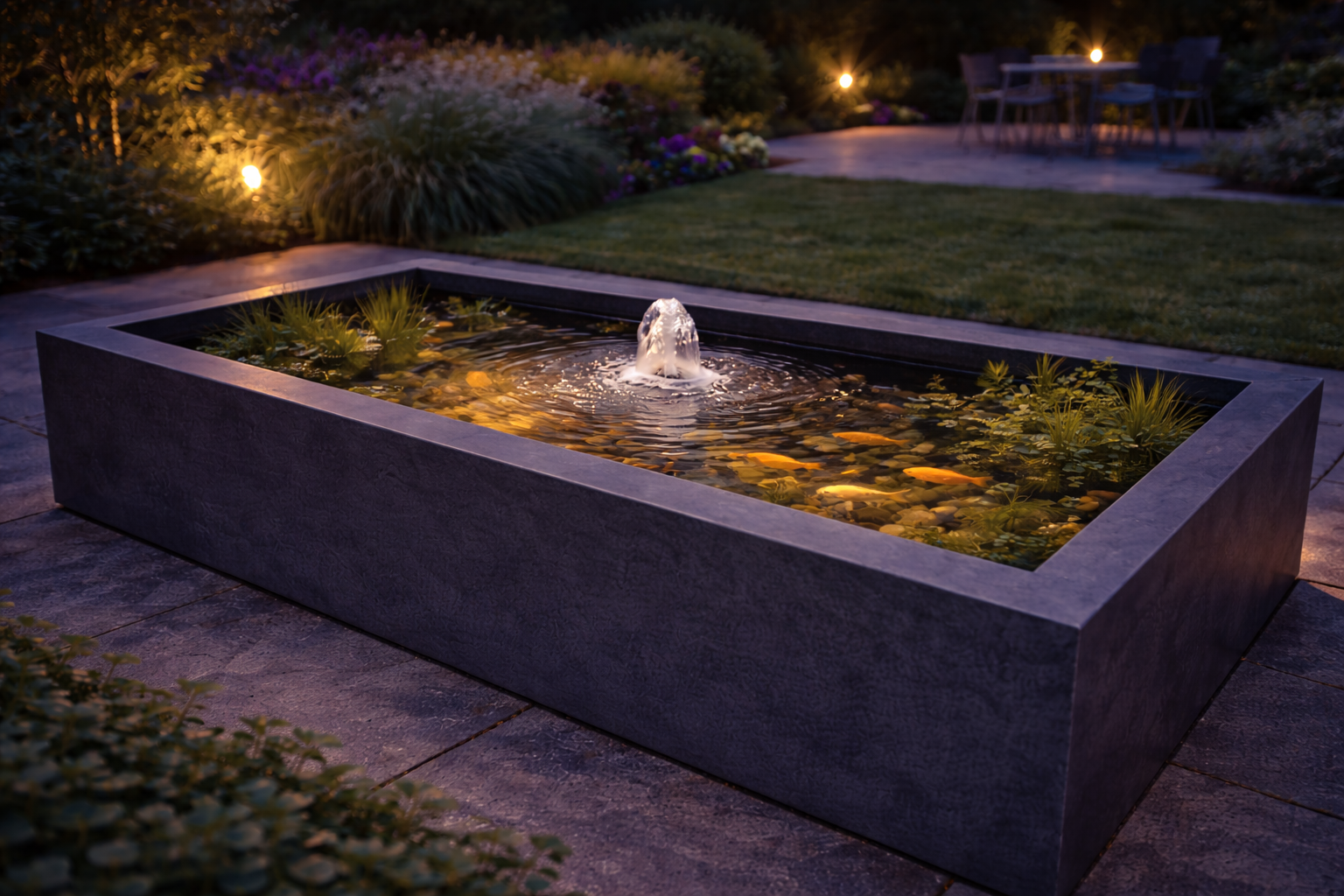
A raised pond with 40–50cm internal water depth and proper circulation can support a small number of fish. Integrated filtration and balanced water movement are critical to maintaining water clarity and fish health.
Stocking levels should remain modest to ensure long-term stability.
Where Do Raised Garden Ponds Work Best?
Raised ponds are ideal for:
• Patios and terraces
• Courtyards
• Structured modern gardens
• Compact urban spaces
• Architectural landscapes
They act as calm focal points without dominating the layout.
Costs of a Raised Garden Pond in the UK
In the UK, high-quality raised garden ponds with integrated filtration typically range between £1,500 and £3,500 depending on size, materials and delivery requirements.
Lower-cost DIY systems may appear cheaper initially but often require additional pumps, liners and maintenance equipment.
Choosing the Right Size
Smaller raised ponds (around 120cm) suit compact spaces.
Mid-size linear designs (around 180cm) balance presence and practicality.
Larger architectural forms (240cm+) suit expansive or formally designed gardens.
Installation Considerations
Raised garden ponds require a level, load-bearing surface such as concrete, paving or reinforced decking.
Because the system sits above ground and holds significant water weight, proper base preparation is essential.
Most modern raised systems are delivered as complete units with integrated filtration, reducing on-site complexity compared to traditional builds.

You might also find these useful
Modern Garden Water Features
Raised Garden Pond Guide
Raised Pond vs Water Feature
Above-Ground vs In-Ground Ponds
Small Garden Water Feature Ideas
Contemporary Raised Pond Ideas
Modern Garden Pond Costs (UK)
Can You Keep Fish in a Raised Garden Pond?
Best Plants for a Raised Pond UK
Design Your Plinth
Raised Pond Lighting Ideas
How to Winterise a Raised Pond
Frequently Asked Questions
A raised garden pond is a freestanding, above-ground water feature that sits on any firm, level surface without excavation. Modern raised ponds are typically manufactured as complete watertight units with integrated filtration, pump, and fountain. They suit patios, courtyards, terraces, and contemporary garden layouts.
Raised garden ponds require no digging, can be placed on existing hard surfaces, and are easier to maintain than in-ground ponds. The raised height makes fish more visible, plants easier to tend, and the pond safer around children. They also suit modern and architectural garden designs where clean lines and geometry are important.
A compact raised pond (around 120cm long) can fit comfortably on most patios and small courtyards. Mid-sized options (around 180cm) work well as a focal point in medium gardens. Larger raised ponds (240cm and above) suit expansive patios and formal garden layouts. Allow at least 50cm clearance around the pond for access and maintenance.
A raised pond must sit on a firm, level, load-bearing surface. Concrete slabs, paving, and compacted gravel are ideal. Decking may need reinforcement depending on the size and water volume. Grass or soft ground is not suitable without a prepared base, as the weight of the filled pond can cause sinking or tilting.
Yes. The integrated pump and filtration system requires a standard outdoor electrical supply. A weatherproof outdoor socket within reach of the power cable is needed. Running costs are low — typically £30–£60 per year for the pump. If you are adding optional lighting, this will use the same outdoor supply.
Yes. A properly designed raised pond with adequate depth (40–50cm minimum internal water depth) and integrated filtration operates year-round in UK conditions. Fish can overwinter safely, and the pump should continue running through winter to maintain water circulation and prevent complete surface freezing.
This depends on the material. Fibreglass raised ponds, like PLINTH, are designed for long-term outdoor use and resist UV degradation, frost damage, and water corrosion. Timber raised ponds have a shorter lifespan and may require re-lining or treatment over time. Corten steel develops a patina but is structurally durable.
Ready to choose yours?
The PLINTH Founding Collection is available now. Three sizes with integrated filtration, pump, and fountain. Free UK delivery.
Browse the Founding Collection →