
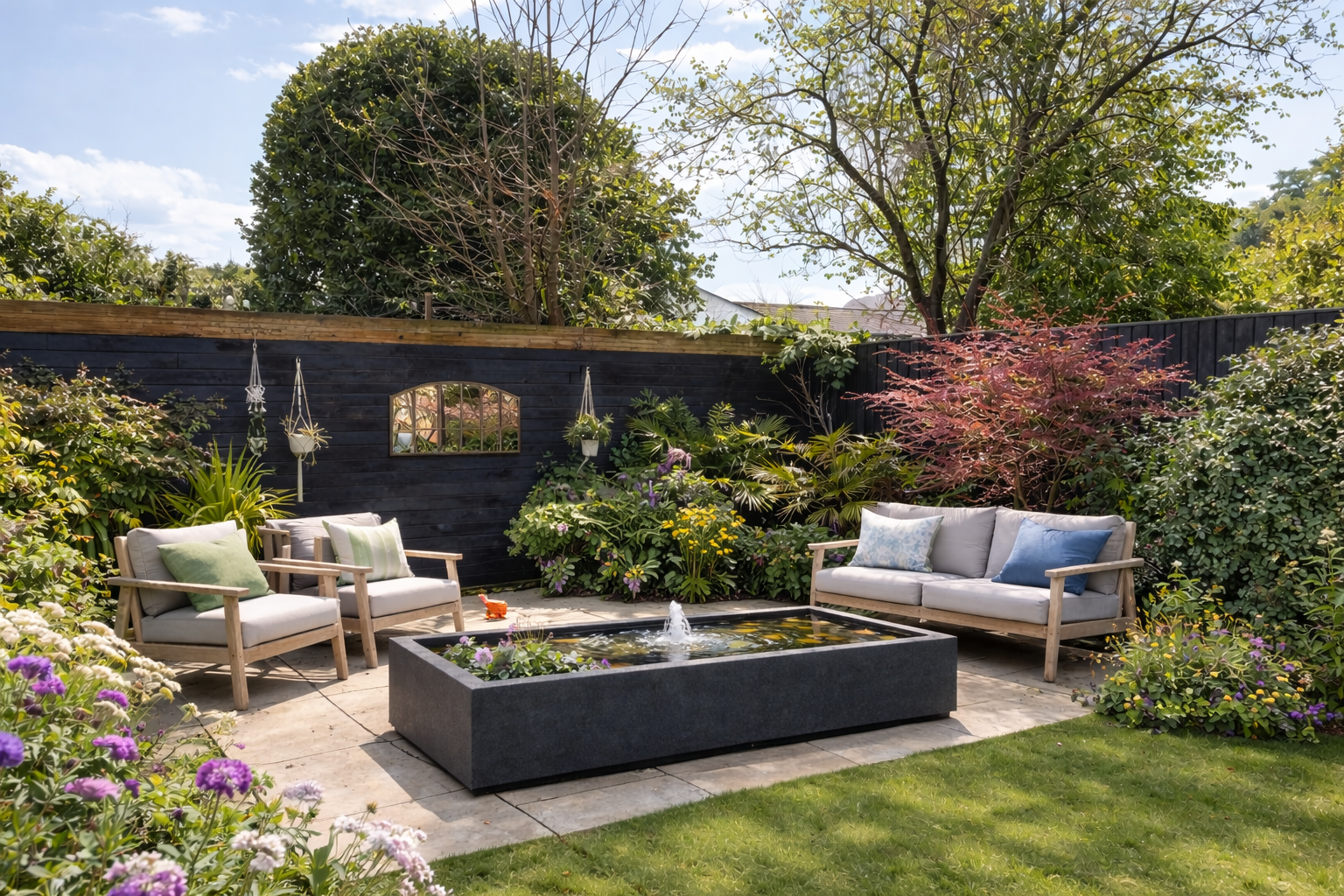
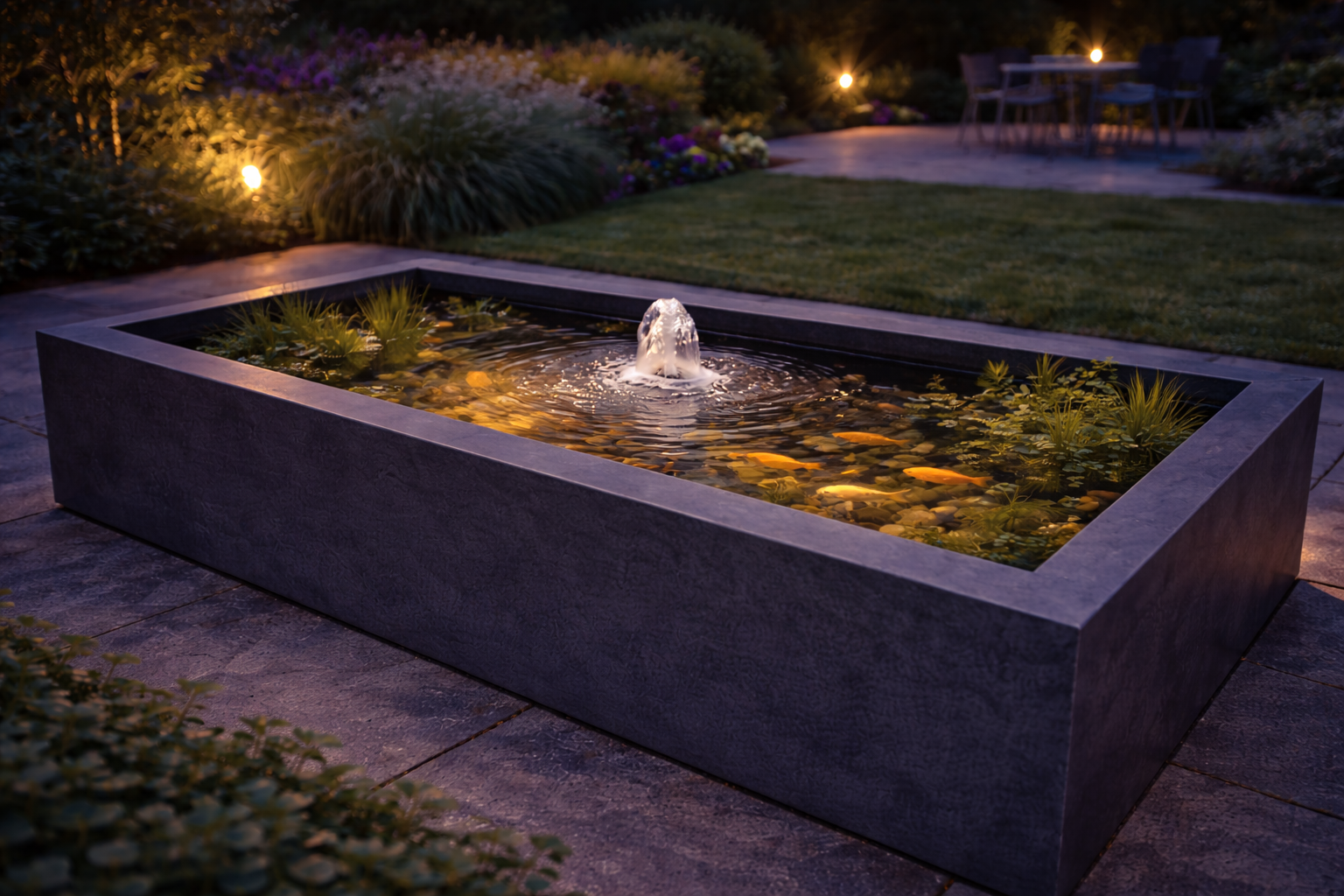
PLINTH is a raised pond with integrated filtration, pump, and fountain. Designed as a single architectural object for your garden. No excavation, no liner, no separate filter system. Place it, fill it, plug it in. This guide covers everything you need to know about keeping fish in a raised pond like PLINTH.
CAN YOU KEEP FISH IN A RAISED GARDEN POND?
Yes. A raised garden pond can comfortably support fish, provided the system meets a few basic requirements around depth, filtration, and water volume.
DEPTH
Fish need enough depth to regulate their temperature and retreat from surface heat or cold. For common UK coldwater species, goldfish, shubunkins, and similar, a minimum internal water depth of around 40–50cm is recommended.
This depth allows fish to overwinter in most UK conditions, though in prolonged hard freezes, a pond heater or floating de-icer may be needed to maintain a small area of open water at the surface.
FILTRATION AND CIRCULATION
Fish produce waste. Without filtration, ammonia levels rise, algae blooms, and water quality deteriorates quickly. Any raised pond intended for fish should include biological filtration (to break down ammonia and nitrite) and mechanical filtration (to remove particulate debris).
A UV clarifier is also recommended to control green water, particularly during spring and summer when sunlight and nutrient levels are highest.
Circulation matters too. Moving water carries more oxygen than still water, which is essential for fish health. A fountain, water return, or circulation outlet keeps the system oxygenated.
STOCKING LEVELS
Overstocking is the most common mistake. A general guideline for coldwater fish in a filtered raised pond is approximately 2.5cm of fish body length per 10 litres of water. In practice, this means:
A 200-litre raised pond could comfortably hold 4–6 small goldfish.
A 400-litre raised pond could hold 8–12, depending on filtration capacity.
A 600-litre or larger system offers more flexibility and a more stable environment.
Start with fewer fish than you think you need. The system will be healthier, the water clearer, and the fish more active.
FEEDING
Feed small amounts once or twice daily during warmer months. Fish are cold-blooded; their metabolism slows significantly in winter, and feeding should be reduced or stopped entirely when water temperatures drop below around 8°C.
Uneaten food decomposes and degrades water quality, so feed only what the fish will consume within a few minutes.
PLANTING
Aquatic plants are beneficial in a fish pond. They provide shade, reduce algae by competing for nutrients, and offer shelter. Marginal plants around the edges and oxygenating plants below the surface both contribute to a balanced system.
Plants are not essential if the filtration is adequate, but they enhance the environment for fish and improve the visual character of the pond.
DO YOU HAVE TO KEEP FISH?
No. A raised pond works beautifully with water alone, or with planting and no fish. The filtration system keeps the water clear and balanced regardless. Fish are entirely optional.

You might also find these useful
Modern Garden Water Features
Raised Garden Pond Guide
Raised Pond vs Water Feature
Above-Ground vs In-Ground Ponds
Small Garden Water Feature Ideas
Contemporary Raised Pond Ideas
Modern Garden Pond Costs (UK)
Can You Keep Fish in a Raised Garden Pond?
Best Plants for a Raised Pond UK
Design Your Plinth
Raised Pond Lighting Ideas
How to Winterise a Raised Pond
Frequently Asked Questions
Yes. Goldfish and shubunkins thrive in a raised pond with proper filtration and adequate water volume. A raised pond with at least 200 litres of water and integrated filtration can comfortably support 3–5 small goldfish. Larger raised ponds of 350–500 litres can support 8–12 fish.
Goldfish and shubunkins are the best choice for a raised pond. They are hardy, colourful, and well-suited to UK outdoor conditions year-round. Avoid koi — they grow too large and produce too much waste for the water volumes a raised pond provides.
As a guide, allow approximately 50–60 litres per small goldfish. A 200-litre raised pond suits 3–5 fish, a 350-litre pond suits 5–8 fish, and a 500-litre pond suits 8–12 fish. Start with fewer than the maximum and add gradually once the biological filtration has matured.
Yes. Fish produce waste that breaks down into ammonia, which is toxic. A biological and mechanical filtration system is essential for keeping the water safe and clear. PLINTH raised ponds include integrated filtration, pump, and fountain as standard.
Yes, provided the pond is deep enough and has adequate water volume. Goldfish enter a dormant state in cold water and stop feeding below approximately 8°C. Keep the pump running to prevent the surface freezing completely, and use a floating de-icer in prolonged freezing conditions to maintain gas exchange.
No. Feed once or twice daily during warmer months (April–October) with a high-quality floating pellet food. Reduce feeding as temperatures drop in autumn and stop entirely when the water temperature falls below 8°C. Resume gradually in spring.
Ready to choose yours?
The PLINTH Founding Collection is available now. Three sizes with integrated filtration, pump, and fountain. Free UK delivery.
Browse the Founding Collection →