

PLINTH is a raised pond with integrated filtration, pump, and fountain — a complete architectural water feature for your garden. This guide covers every type of modern water feature, the materials they're made from, and how to choose the right one for your space.
Modern Garden Water Features
Types of Water Feature
A raised garden pond is an above-ground water system designed to sit directly on patios, terraces and Types of Water Feature
Raised ponds
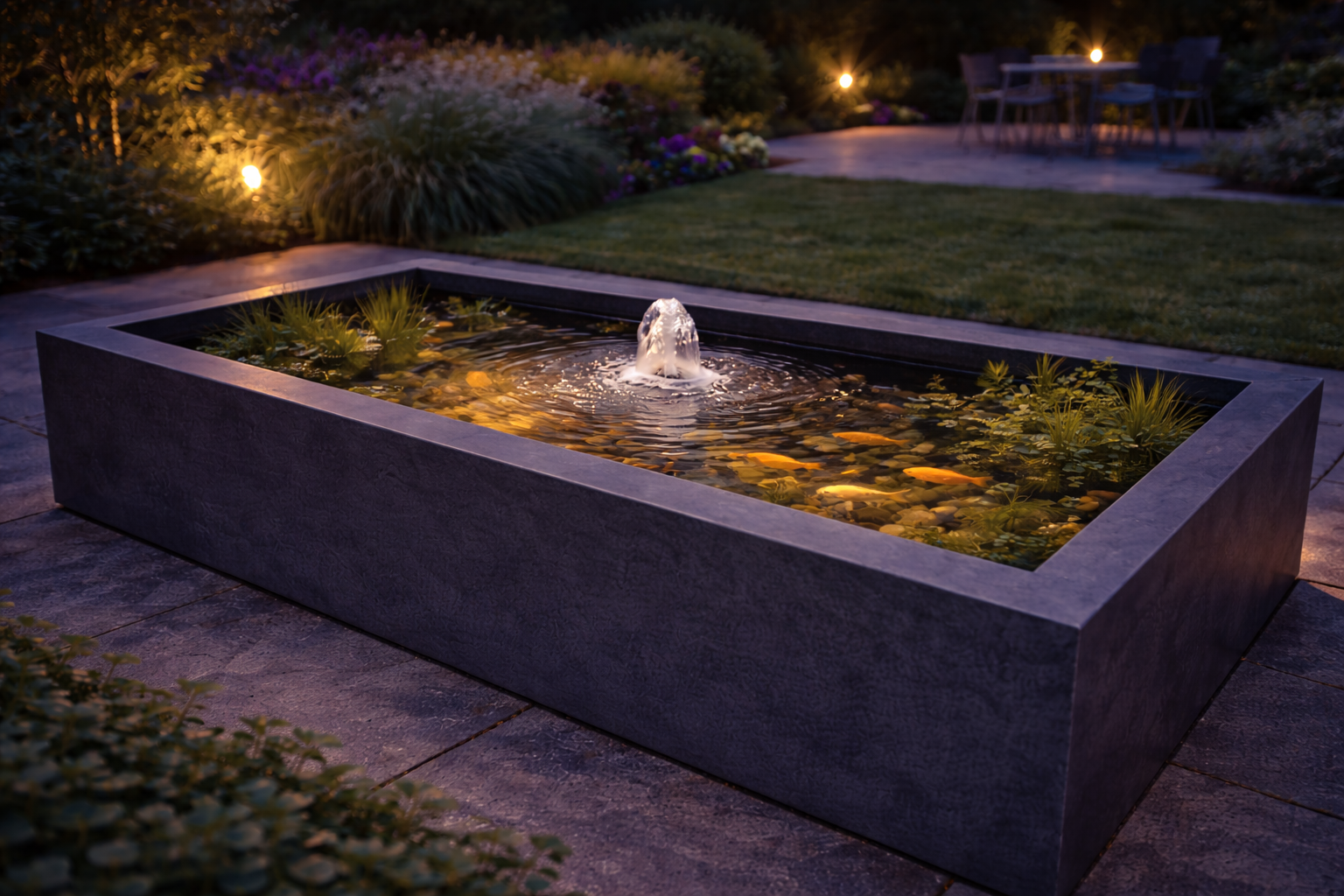
A freestanding, above-ground pond with integrated filtration and circulation. No excavation required. Can support plants and fish. Works as a simple water feature or a living ecosystem. PLINTH is a raised pond with built-in filtration, pump, and fountain — from £2,295.
Rills and channels
Narrow, shallow water channels built into paving or stone. Require professional installation and plumbing. Best for larger, formally designed spaces.
Fountains
Freestanding, wall-mounted, or tiered. Self-circulating with a hidden reservoir. Primarily decorative — no fish or planting. From around £100 to £5,000+.
Water blades and waterfalls
A thin sheet of water falls from a mounted lip into a basin below. Dramatic visual effect. Requires plumbing and a reservoir. Best against a wall or as part of a larger design.
Water bowls and tables
Shallow vessels with still or gently bubbling water. Reflect light and sky. Minimal maintenance. Cannot support fish. From around £200 to £2,000.
Pebble features and bubbling rocks
Water bubbles through stone into a hidden reservoir. Compact, safe for children, low maintenance. No fish or planting. From around £100 to £500.

Materials
The most common materials for modern water features are fibreglass, corten steel, stone, and concrete. Fibreglass offers the best balance of durability, weight, and versatility — it's frost-proof, UV-resistant, and can be finished to replicate any material. PLINTH is manufactured in fibreglass by a UK specialist.
Materials Compared
Fibreglass (GRP) - lightweight, durable, frost-proof, UV-resistant. Can be finished in any colour or texture. Does not rot, rust, or degrade. The modern standard for premium water features.
Corten steel — distinctive rust patina. Heavy and expensive. Rusting can stain surrounding surfaces. No integrated filtration.
Natural stone — beautiful and unique. Extremely heavy. Requires professional installation. Expensive.
Concrete — industrial aesthetic. Very heavy. Can crack in severe frost. Often poured in-place for bespoke features.
Timber — warm and rustic. Requires a liner. Rots over time — typical lifespan 5–10 years.
Plastic / preformed — cheapest option. Looks like plastic. UV degradation over time. Budget only.
Choosing by Garden Style
Minimalist and Scandinavian — clean lines, single material, open space. A raised pond with pebbles and a fountain, nothing else.
Contemporary and architectural — geometric forms, integrated lighting, structured planting. A raised pond as a design object on a stone terrace.
Japanese and Zen — asymmetry, restraint, natural materials. A single iris in still water, gravel surround.
Mediterranean and courtyard — warm tones, enclosed walls, herbs nearby. A raised pond as the centrepiece of an intimate outdoor room.
Cottage and traditional — abundant planting, wildlife-friendly. A raised pond with marginals, oxygenators, and visiting dragonflies.
Urban and small garden — compact features for maximum impact. A small raised pond on a patio with the sound of a fountain creating a sense of escape.
Practical Considerations
Power — most water features with a pump need an outdoor electrical supply. Running costs are typically £30–£60 per year.
Maintenance — ranges from almost zero (pebble features) to moderate (fish ponds). Raised ponds with integrated filtration need significantly less maintenance than traditional ponds.
Wildlife — any water attracts birds, insects, and amphibians. Planted ponds support the most biodiversity.
Safety — raised ponds are generally safer around children than in-ground ponds. The walls provide a barrier. Supervision is still recommended.
Planning permission — freestanding features that don't involve excavation generally don't require planning permission in the UK.

You might also find these useful
Modern Garden Water Features
Raised Garden Pond Guide
Raised Pond vs Water Feature
Above-Ground vs In-Ground Ponds
Small Garden Water Feature Ideas
Contemporary Raised Pond Ideas
Modern Garden Pond Costs (UK)
Can You Keep Fish in a Raised Garden Pond?
Best Plants for a Raised Pond UK
Design Your Plinth
Raised Pond Lighting Ideas
How to Winterise a Raised Pond
Frequently Asked Questions
A raised pond with integrated filtration offers the most versatility — it works as a simple fountain feature, a planted feature, or a full living pond with fish. Unlike rills, fountains, or water bowls, a raised pond gives you all three options in one object.
Pebble fountains and water bowls require almost no maintenance. A raised pond in the clean and minimal style — water and pebbles only — is also extremely low-maintenance. Top up water in summer and clean the pump filter every few months.
Costs range from under £100 for a simple solar-powered fountain to over £5,000 for bespoke corten steel or stone features. Premium raised ponds with integrated filtration start from £2,295 and include everything needed to run.
Most features with a pump require a standard outdoor electrical supply. Running costs are low — typically £30–£60 per year. Solar-powered alternatives exist but are less reliable and cannot power filtration.
Fibreglass offers the best combination of durability, weight, and versatility. It is UV-resistant, frost-proof, lightweight, and can be finished to replicate concrete, stone, or metal.
Generally no. Freestanding features that don't involve excavation or structural changes don't require planning permission. Check with your local authority if your property is listed or in a conservation area.
Ready to choose yours?
The PLINTH Founding Collection is available now. Three sizes with integrated filtration, pump, and fountain. Free UK delivery.
Browse the Founding Collection →